For property managers, landlords & business owners
Planning Commercial Concrete as a Capital Expense
What to know about repair versus improvement, depreciation timing and Michigan's short pour season before you approve the budget.
Repair, improvement, or both
The fastest way to blow a capital budget is to treat a failing lot as an annual patching line item for five years and then replace it anyway. We give you a written condition assessment that separates what can genuinely be repaired from what has reached the end of its service life.
That separation matters on your books: routine maintenance is generally expensed in the year it is incurred, while replacement and new paved area are generally capitalized and depreciated. Your accountant decides the treatment — our job is to hand you a scope specific enough that they can.
Commercial concrete: repair vs. capital improvement at a glance
| Concrete scope | Typical classification | Typical tax treatment |
|---|---|---|
| Joint sealing & crack patching | Routine maintenance / repair | Generally deducted in the year incurred |
| Small panel replacement & trip-hazard repair | Repair | Generally deducted; larger scopes may be capitalized |
| Full drive lane or bay tear-out & replacement | Capital improvement | 15-year MACRS land improvement; may be bonus-eligible |
| New paved area, dumpster pads & equipment slabs | Capital improvement | 15-year MACRS land improvement |
| ADA ramps & accessible routes | Improvement / barrier removal | Land improvement; small businesses may qualify for the Section 44 credit |
Michigan's pour window drives your tax year
A deduction follows the date the property is placed in service. Concrete placed in late fall risks cold-weather delays, and once the ground freezes the job moves to spring — into the next fiscal year. Large commercial flatwork should be bid in winter, scheduled in spring, and poured well before October.
Built for Michigan freeze-thaw
Commercial slabs in Western Oakland and Livingston counties take years of frost heave, plow blades and road salt. We place 4,500 PSI air-entrained concrete over a compacted 21AA crushed concrete base, reinforce it, and saw-cut control joints so cracking happens where we plan it. Footings for dumpster enclosures and bollards go below the frost line set by your local building code.
Commercial concrete bid checklist for property managers
- Concrete mix spec in writing: 4,500 PSI, air-entrained for freeze-thaw.
- Base spec: compacted 21AA crushed concrete, with depth stated.
- Reinforcement listed: wire mesh or rebar, plus saw-cut control joints in 6' x 6' sections at 25% of slab depth.
- A written phasing schedule that keeps entries, drive-thrus and docks open.
- Liability and workers' compensation certificates, Michigan Builder License number and written warranty terms.
Phasing large properties
We break big lots into sections so a property can stay operational and the spend can be split across budget years: drive lanes one season, parking bays and sidewalks the next. You get a per-phase price up front rather than a surprise change order.
Common questions
Is a commercial parking lot replacement a repair or a capital improvement?
A full tear-out and replacement is generally a capital improvement; patching and joint sealing are generally deductible repairs. Replacing a lot, or adding new paved area, is typically depreciated as a land improvement. Your CPA makes the final call on your books.
Does commercial concrete qualify for Section 179 or bonus depreciation?
Exterior concrete like parking lots, sidewalks and curbs generally does not qualify for Section 179, but is typically 15-year MACRS land improvement property that may be eligible for bonus depreciation. Section 179's qualified improvements cover items like roofs, HVAC, fire protection and security systems. Confirm the current-year rules with your CPA before you sign.
What is the deadline for pouring commercial concrete in Michigan?
Large commercial flatwork in Oakland and Livingston counties should be poured by October. After that, freezing ground and cold temperatures risk delays that push the job, and the placed-in-service date, into spring and the next tax year.
Can a large commercial lot be phased over two budget years?
Yes. We split lots by drive lane, section or building so tenants keep access and the spend lands across two budget cycles, with a per-phase price up front.
Are ADA ramps eligible for a tax credit?
Possibly. Eligible small businesses may claim the IRS Disabled Access Credit (Section 44) for barrier-removal work such as accessible ramps and routes. Eligibility depends on revenue and headcount, so check with your CPA.
This page is general information from a concrete contractor, not tax advice. Confirm every treatment with your CPA or tax advisor.
Commercial work we do
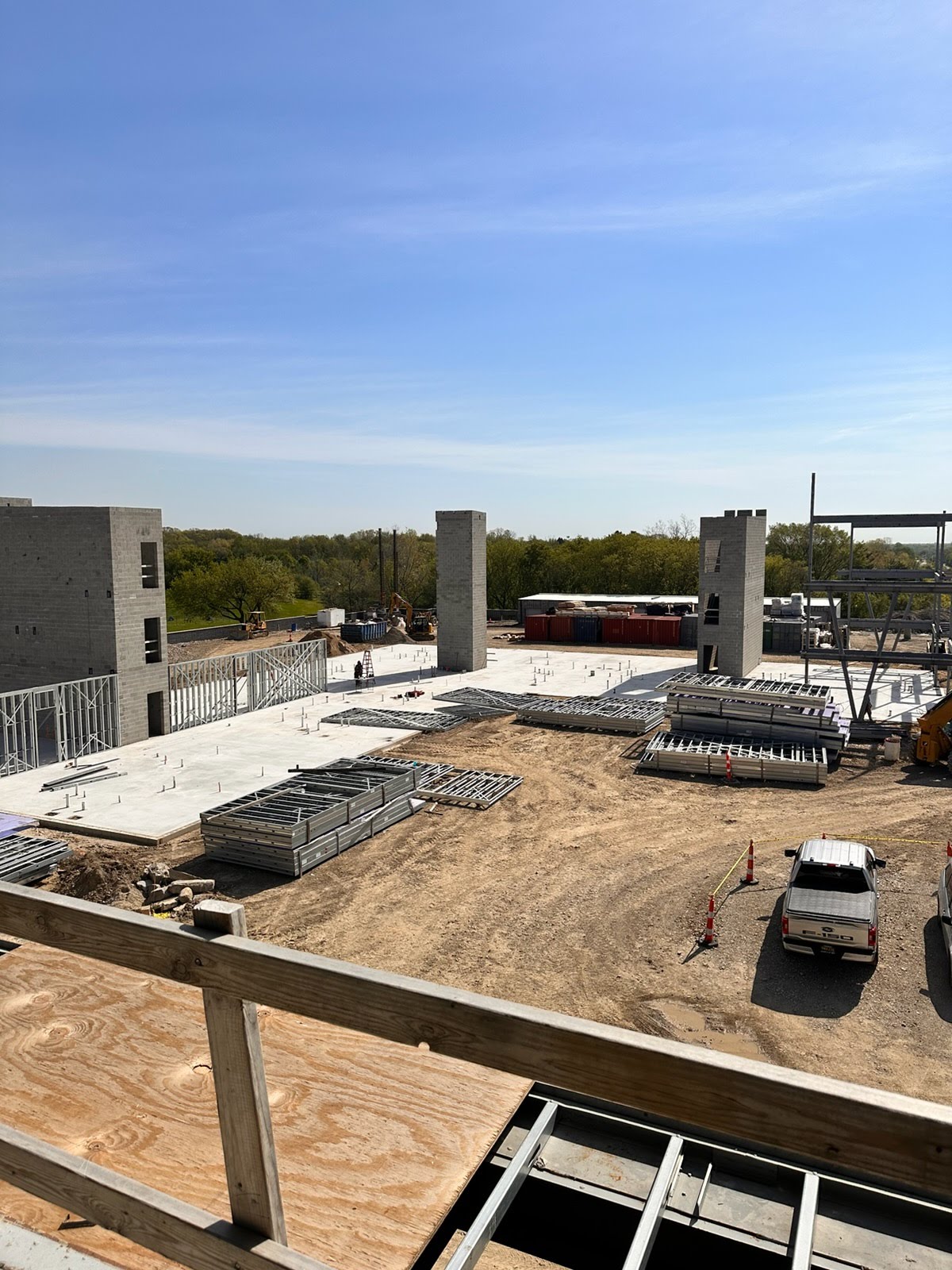
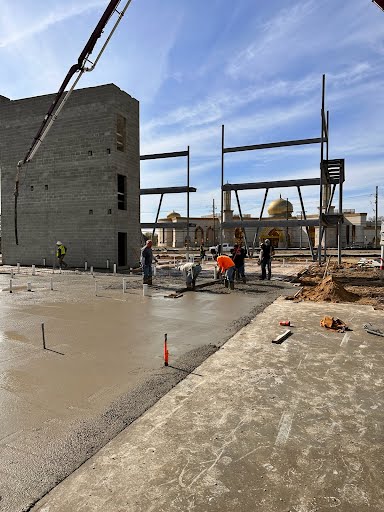
Commercial concrete slabs, poured by our own crews
Who we work for
Commercial owners we pour for every season
Strip mall owners
Drive lanes, ADA parking, sidewalks and curb replacement phased so tenants stay open.
Landlords & property managers
Multi-building capital plans, dumpster pads, walkways and per-property budgets.
Banks & credit unions
Drive-through lanes, ATM approach slabs and ADA-compliant entrances.
Retail & restaurants
Patios, entries, grease-area slabs and delivery approaches poured off-hours.
Medical & office parks
Accessible routes, ramps and smooth, ADA-compliant walking surfaces.
Apartments & HOAs
Sidewalk trip-hazard removal, mailbox pads, carport slabs and association snow contracts.
Churches & schools
Parking expansions, accessible entries and high-traffic entry slabs.
AUTO DEALERSHIPS & AUTO REPAIR SHOPS
Display pads, service drives and slabs rated for lift and truck loads.
Industrial & warehouse
Loading docks, dock approaches, trailer aprons and heavy equipment pads.
Municipalities
Sidewalk programs, curb and gutter, and ADA ramp compliance work.
Ready for a straight answer on your project?
Call the shop or send the form. We measure on site, put the scope in writing, and tell you honestly whether replacement or repair is the right call.